Acrylic and ACP router cutting produce very different edges, joints and installation risks, so the material name alone is not enough for a reliable quote. You will be able to choose the right cutting method, prepare a production-ready file and specify the tolerances, finish and panel details a Nagpur fabricator needs.
Key takeaways
- Use closed 1:1 vector paths with separate cut and engraving layers.
- Choose laser for acrylic edges; choose CNC routing for ACP panels.
- Leave fixing holes, returns, clearances and cable routes in the installation plan.
- Compare quotes using sheet grade, thickness, tooling, finishing and delivery scope.
How a CNC Router Turns Your Drawing Into an Acrylic or ACP Part
A CNC router turns a 1:1 vector drawing into a physical part by following closed paths with a rotating cutter. The sheet sits on a vacuum table or under clamps, while the machine removes material along programmed toolpaths.
1. File check: The operator confirms scale, units, closed contours, cut direction and part dimensions. Open paths or duplicate lines can create incomplete or doubled cuts.
2. Sheet placement: The operator secures the acrylic or ACP sheet flat and aligns it to the drawing origin. Poor restraint or an uneven vacuum table can shift the profile.
3. Tool selection: The cutter is matched to the material, thickness and edge requirement. For acrylic, a sharp polished single-flute O-flute cutter helps carry heat away in the chip.
4. Cutting: The CNC follows the toolpaths through the sheet, or makes partial grooves for a specified operation.
5. Part removal: Tabs or micro-joints may hold small letters and loose pieces until cutting ends. Removing them leaves witness marks, so agree their locations beforehand.
6. Edge inspection: Check dimensions, burrs, melting, chips and the requested finish before installation.
A router cutting service in Nagpur is not automatically an acrylic or ACP supplier because its listing mentions aluminium, steel or glass. Ask whether it cuts cast PMMA, extruded PMMA and the exact ACP brand and core you will provide.
Machine repeatability is not finished-part tolerance; tool diameter, restraint and thermal movement affect the result. Put the required tolerance on the drawing for interlocking letters, push-fit parts and cassette joints. Ask: can you cut my material, thickness and sheet size with the required edge finish? Acrylic router cutting in Nagpur should answer that question directly.
Choosing Acrylic, ACP, Laser, Hand and Knife Cutting for the Job
Choose 3 mm acrylic for many flat overlays and small letters, 5 mm for larger letters or stand-offs, and 8–10 mm for deeper relief or freestanding parts when the fixing design can carry the extra weight.
Cast PMMA generally machines more cleanly and has lower residual-stress risk than extruded PMMA, which is more prone to burrs, smearing and stress-crazing when heat builds up.
For acrylic router cutting in Nagpur, specify the sheet type, thickness and edge finish. A sharp, polished single-flute O-flute cutter carries heat away with the chip; excessive spindle speed, a blunt cutter or insufficient feed makes the tool rub, melting the edge and welding chips to it.
| Method | Best use | Main limitation |
|---|---|---|
| Laser cutting | Thin acrylic and intricate profiles | Less suitable as thickness increases |
| Hand cutting | One-off rough work | Uneven accuracy and finish |
| CNC knife cutting | Sheet goods that do not need a rotating tool | Cannot machine rigid acrylic or ACP like a router |
| CNC routing | Thick acrylic, ACP panels, engraving, V-grooves and repeat parts | Requires correct tooling, restraint and programmed feeds |
Use 3 mm or 4 mm ACP for common sign-panel work, then select thickness against required stiffness, return depth, weight and edge treatment. Routing suits ACP openings, repeat profiles and folding grooves because it removes material predictably; laser cutting does not replace that control on composite panels.
A router-finished acrylic edge also remains distinct from wet-sanded, diamond-polished or flame-polished finishes.
What an ACP Router Can Cut—and What the Installation Must Allow
Flat letters, logos, backing plates, stencil shapes, decorative cut-out patterns and panel openings are suitable ACP router components. Folded sign parts require a different toolpath because the cut must support fabrication, not simply remove material.
| Component | Router operation | Fabrication consequence |
|---|---|---|
| Flat letters and logos | Through-cut profile | Check edge finish, spacing and fixing points |
| Backing plates | Through-cut panel shape | Allow clearance behind the face component |
| Stencil shapes | Through-cut openings | Keep narrow bridges wide enough to survive handling |
| Decorative patterns | Repeated through-cuts | Add edge margins to prevent weak strips |
| Panel openings | Through-cut aperture | Confirm frame strength and access for installation |
| Trays and returns | V-groove or folding cut | Bend along the groove without separating the part |
| Façade cassettes | V-groove, fold and join | Match groove depth to the specified panel construction |
A V-groove or folding cutter must leave the specified aluminium skin and enough core support. Cutting through both aluminium skins creates a separated part, not a controlled fold.
A router cannot make an internal corner sharper than its cutter radius. Add a dog-bone relief, specify a larger radius or allow secondary hand finishing; otherwise square-looking letters and cassette corners will remain visibly rounded.
Confirm the ACP core before fabrication. Standard polyethylene-core ACP and mineral-filled fire-retardant ACP have different fire performance, so select the required classification before routing because fabrication cannot upgrade the core.
Outdoor fixing needs movement allowance. A 2 m acrylic part can change about 5.6 mm across a 40°C temperature swing. Use oversized holes, stand-off bushings, adequate edge clearance, rounded slot ends and washers to reduce cracking from thermal movement, vibration and fastener stress.
An ACP router cutting service in Nagpur should receive these installation details with the cutting file.
Production-Ready Artwork Checklist for Router Cutting
1. Supply a 1:1 vector file in an agreed format: AI, EPS, SVG, DXF or vector PDF. State millimetre units, the file origin and the final sheet orientation so the fabricator does not scale, rotate or mirror the job incorrectly.
2. Convert every font to outlines. Join contours, close every shape and remove duplicate lines. Open paths can produce incomplete profiles; overlapping contours can cause double cuts, and unjoined letter shapes can leave unexpected tool marks.
3. Create separate named layers for through-cut, V-groove, score, drill and engraving operations. Do not rely on colour alone to identify toolpaths.
4. Mark inside and outside cuts, hole diameters, slot dimensions, countersinks and the finished-face orientation. Show the panel slice direction when grain, brushing or a visible ACP face affects installation.
5. State the cutter diameter or required kerf compensation wherever the fit depends on it. Add dog-bone reliefs, a larger radius or a hand-finishing note for square internal corners; a router cannot cut an inside corner sharper than its tool radius.
6. Nest the parts with the required edge margin, identify the sheet size and label every loose part. Include the material, thickness and quantity on the drawing rather than leaving them to a quotation email.
7. Agree on tab or micro-joint locations for small acrylic letters and ACP pieces before cutting. Removing them leaves witness marks, especially on gloss faces.
8. State whether protective film stays on, is removed in strips or is replaced after finishing. Keep the spoilboard clean: loose film can catch the cutter, lift at the cut line or transfer adhesive.
How to Request and Compare a Nagpur Router-Cutting Quote
Send a precision cutting service near me a 1:1 drawing and request written confirmation before comparing prices. Include:
- Material grade, cast or extruded acrylic, ACP core, thickness, sheet size and quantity
- Drawing format, target tolerance, part labels, required tabs, hole clearances and installation direction
- Edge finish, protective-film handling, indoor or outdoor use, and whether the shop supplies cut components only or also finishes and assembles them
A router cutting service in Nagpur should also confirm whether the quoted tolerance applies to finished parts, not merely machine repeatability. A low cutting price means little unless the drawing states dimensions, tolerance and acceptance criteria.
| Edge finish | Result and risk | Specify when |
|---|---|---|
| Router-finished | Cut marks remain visible | Edges will be hidden or painted |
| Wet-sanded | Smoother matte edge | You need controlled hand finishing |
| Diamond-polished | Clear, glossy edge | The acrylic edge is prominently visible |
| Flame-polished | Clear edge with heat exposure | Use cautiously near holes, bonded joints or stressed extruded sheet; thermal stress can cause later crazing |
Ask whether protective film stays during cutting, is removed in strips or is replaced afterward. Confirm sheet orientation and mark the finished face.
O D SERVICES INC ! 7020296858 ! is one local option to contact, but compare its written material-specific confirmation with every other quote. Inspect a sample edge or first article before releasing a batch. Two quotes describe the same result only when their material, tolerance, finish and supply scope match.
Related product
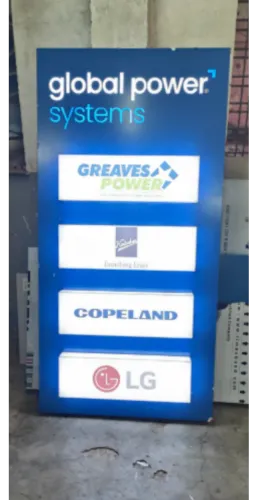
Manufacturer of a wide range of products which include LED ACP Signage and Acrylic Signage. LED ACP Signage Acrylic Signage View product → |
Frequently asked questions
How does a CNC router turn artwork into an acrylic or ACP sign part?
The router imports a 1:1 vector drawing, follows closed paths with programmed toolpaths, and removes material using a rotating cutter while the sheet is held by vacuum or clamps.
When should you choose CNC routing instead of laser, hand or knife cutting?
Choose CNC routing for shaped acrylic or ACP parts and larger sheet work; laser cutting suits acrylic edge finish and fine detail, while hand or knife cutting suits simpler thin materials.
What must an ACP router-cut sign allow for during installation?
Plan for panel thickness, fixing holes, edge clearances, returns, joints, cable routes and the supporting surface before finalising the cut file.
What should you include when requesting a Nagpur router-cutting quote?
Send the 1:1 vector file, material and thickness, quantities, dimensions, finish, edge treatment, holes, delivery deadline and installation requirements so suppliers can compare the same scope.
Keywords